

If you’ve ever shopped for insulation, you’ve probably seen those R-numbers plastered all over the packaging. R-20, R-40, R-60. But what do they actually mean?
R-value is a measurement of thermal resistance. It tells you how well a material resists the flow of heat through it. The ‘R’ literally stands for resistance, and the higher the number, the better that material is at keeping heat where you want it.
Think of it like a shield protecting your home from temperature extremes. A material with R-20 provides twice the thermal resistance of one with R-10. Simple as that.
Why R-Value Matters for Quebec Homeowners
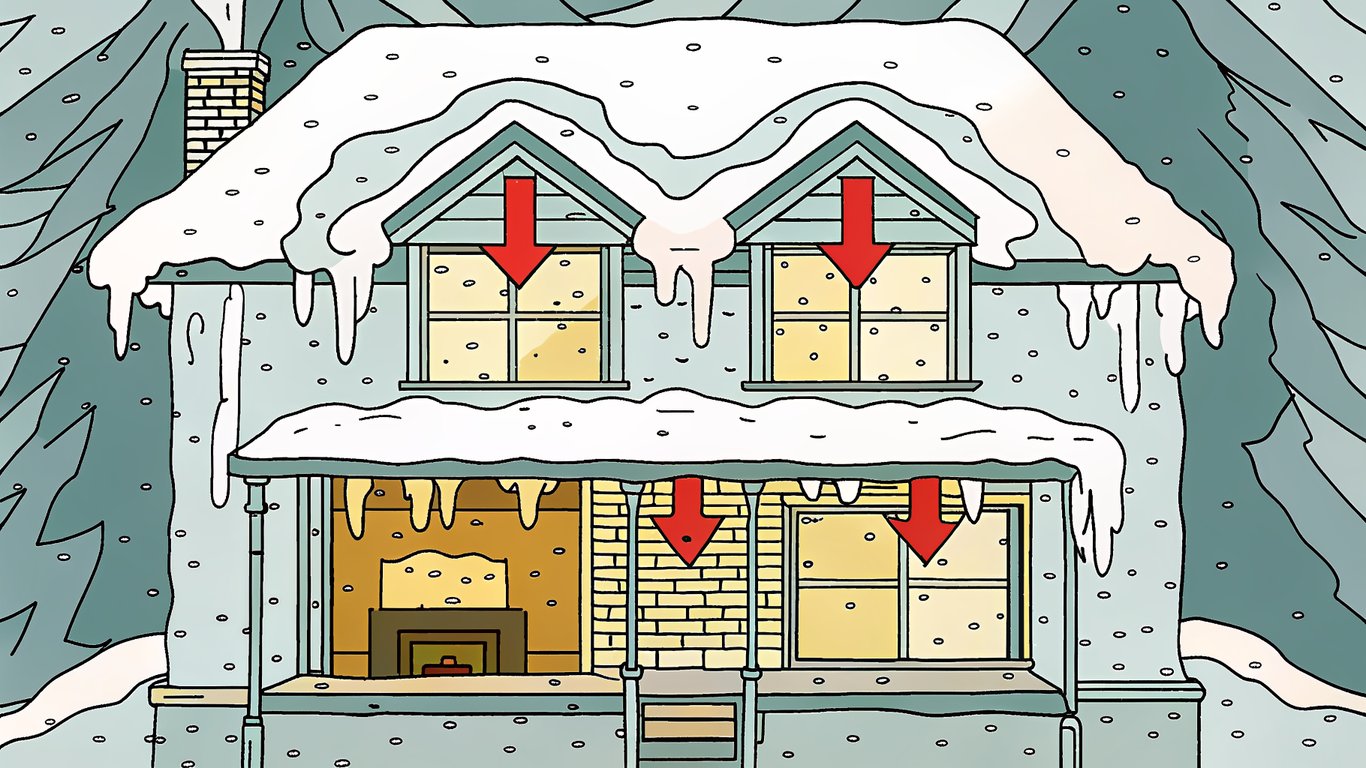
Quebec winters aren’t exactly gentle. When you’re dealing with temperatures that regularly drop below -20°C for months at a time, your home’s ability to resist heat loss becomes critical.
Here’s the thing: heat always moves from warm to cold. During winter, the warmth you’re paying to generate inside your home is constantly trying to escape to the frigid outdoors. Insulation with proper R-value slows down that escape.
Without adequate R-value, you’re basically heating the outdoors. And with Quebec’s six-month heating season, that gets expensive fast.
The Relationship Between R-Value and Energy Efficiency
Higher R-values create better thermal barriers. It’s not complicated. When heat can’t escape as easily, your heating system doesn’t have to work as hard to maintain comfortable temperatures.
This translates directly to lower energy consumption. Many Quebec homeowners see heating cost reductions of 20-40% after upgrading to proper R-values in key areas like attics and walls.
But it’s not just about winter. Proper insulation also keeps your home cooler during those increasingly warm Quebec summers, reducing air conditioning costs too.
How R-Value Works: The Science Made Simple
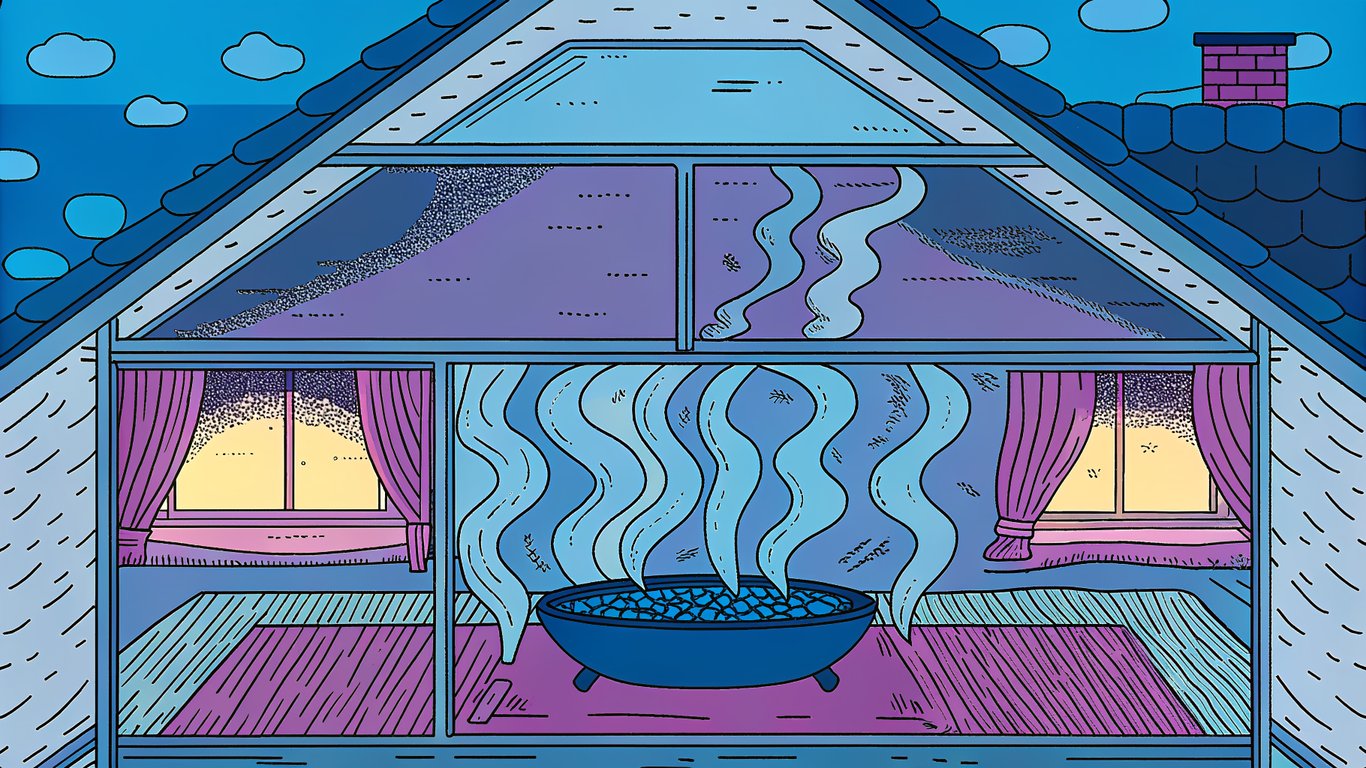
Understanding how r value works doesn’t require a physics degree. Heat moves through your home in three ways: conduction, convection, and radiation. Insulation primarily tackles conduction, which is heat moving through solid materials.
Understanding Heat Flow in Your Home
Conduction happens when heat transfers through direct contact. Touch a cold window in winter and you feel conduction in action. Heat from your warm hand moves into the cold glass.
In your walls, heat conducts from the warm interior surface through the wall materials to the cold exterior. The better your insulation resists this conductive heat flow, the higher its R-value.
Convection involves heat moving through air currents, while radiation is heat traveling as electromagnetic waves. Insulation addresses all three to some degree, but R-value specifically measures resistance to conductive heat flow.
How Insulation Materials Resist Heat Transfer
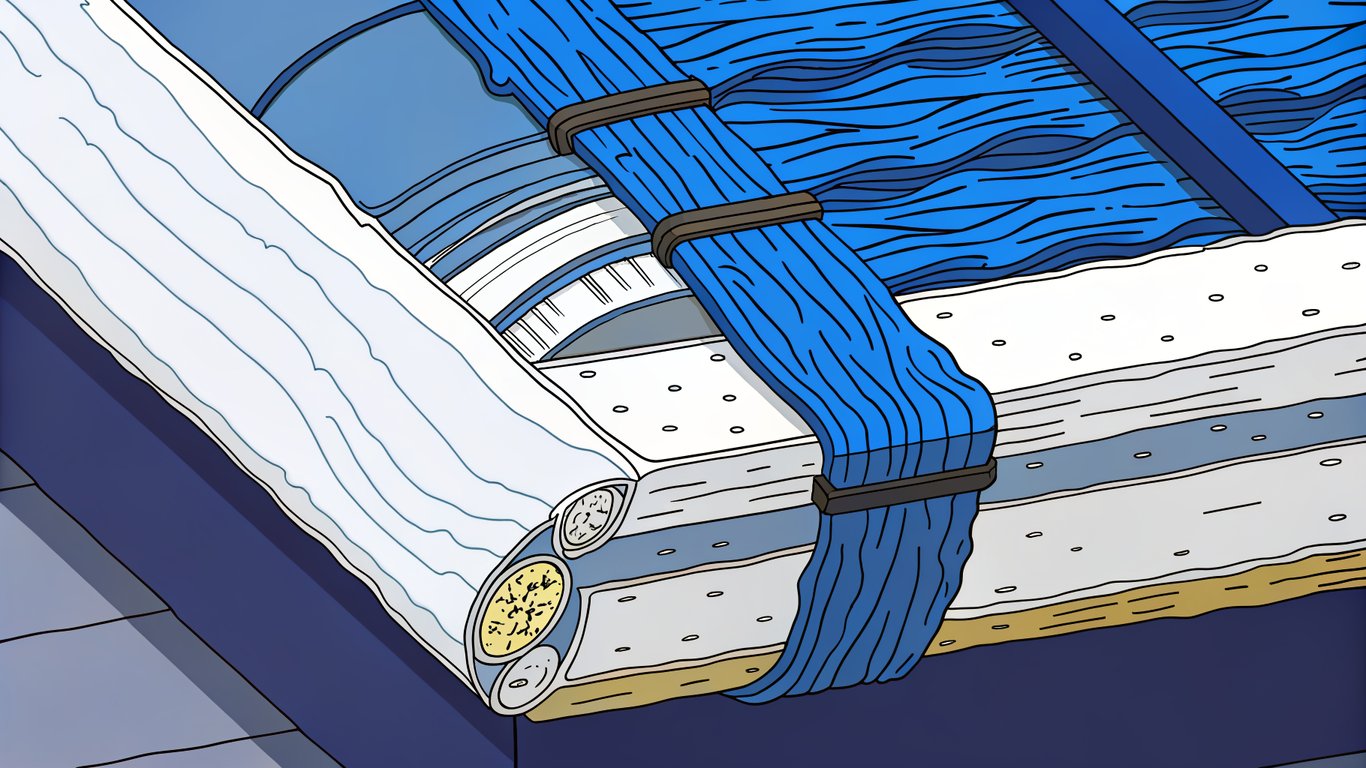
Most insulation materials work by trapping tiny pockets of air. Air is actually a pretty good insulator when it’s not moving around. Fiberglass insulation, for example, consists of fine glass fibers that create millions of small air pockets.
These trapped air pockets slow down heat movement significantly. The more air pockets and the better they’re trapped, the higher the R-value.
Spray foam insulation works similarly but creates closed cells filled with gas that has even better insulating properties than air. That’s why spray foam typically achieves higher R-values per inch than fiberglass.
The ‘Higher is Better’ Principle
When it comes to R-value, more is almost always better. An attic with R-60 insulation will outperform one with R-40, which beats R-20, and so on.
But there’s a point of diminishing returns. Going from R-10 to R-30 makes a huge difference. Going from R-50 to R-70 still helps, but the improvement is less dramatic.
For Quebec homes, building codes set minimum R-values, but exceeding those minimums often makes financial sense given our climate.
R-Value vs. U-Value: What’s the Difference?
You might also encounter U-value, especially when shopping for windows. U-value measures thermal transmittance, which is basically the opposite of R-value.
While R-value measures resistance to heat flow (higher is better), U-value measures how easily heat passes through (lower is better). They’re mathematically related: U-value equals 1 divided by R-value.
A window with U-0.25 has an R-value of 4. Most people find R-value more intuitive, but both measurements tell you the same story about thermal performance.
How to Read and Interpret R-Value Ratings
Walking into a hardware store and seeing all those R-value numbers can feel overwhelming. Here’s how to make sense of them.
Decoding R-Value Numbers (R-10, R-20, R-40, etc.)
The number after the R tells you the thermal resistance. R-20 provides twice the resistance of R-10. R-40 is twice as good as R-20. The math is straightforward.
Different materials achieve the same R-value at different thicknesses. Fiberglass typically provides about R-3 to R-4 per inch. So to get R-20, you’d need roughly 5-6 inches of fiberglass.
Spray foam, on the other hand, can provide R-6 to R-7 per inch. You’d only need about 3 inches to hit R-20. That’s why spray foam costs more but takes up less space.
Reading Insulation Product Labels
Product packaging should clearly display the R-value, usually in large numbers. Look for the total R-value the product provides when installed at the recommended thickness.
You’ll also see coverage area (how many square feet the package covers) and thickness. Make sure you’re comparing apples to apples when shopping. A cheaper product might require more material to achieve the same R-value.
Some labels also show R-value per inch, which helps you understand the material’s efficiency. This matters when you have limited space, like in walls with 2×4 studs.
Total R-Value vs. Per-Inch R-Value
This distinction trips people up. Per-inch R-value tells you how efficient the material is. Total R-value tells you what you actually get after installation.
If you install 10 inches of material with R-3 per inch, your total R-value is R-30. If you only install 5 inches, you get R-15. The per-inch rating stays the same, but your total protection changes.
When building codes specify R-values, they’re talking about total R-value. That’s what actually matters for your home’s thermal performance.
Understanding Effective R-Value
Here’s where things get real. The R-value on the package assumes perfect installation. In practice, you might not achieve that rated value.
Compression reduces R-value significantly. If you stuff R-20 fiberglass into a space meant for R-15, you’re compressing the material and eliminating those air pockets that provide insulation. You might end up with only R-12 or R-13.
Gaps and air leaks also reduce effective R-value. Even a small gap can allow air to bypass your insulation entirely, dramatically reducing performance. That’s why air sealing is so critical.
Moisture is another enemy. Wet insulation loses much of its R-value because water conducts heat much better than air. Proper vapor barriers and ventilation protect your insulation’s performance.
Recommended R-Values for Quebec Homes
Quebec’s climate demands serious insulation. Here’s what you should aim for in different areas of your home.
Quebec Climate Zone and Building Code Requirements
Quebec falls into climate zone 6 and 7 in the National Building Code of Canada. These are cold climate zones with significant heating requirements.
Current building codes set minimum R-values, but these are just starting points. Many energy-efficient homes exceed code minimums significantly.
Attic and Roof Insulation R-Values
Your attic should have R-50 to R-60 minimum. This is the most critical area because heat rises, and your attic is where most heat loss occurs.
Some Quebec homeowners go even higher, installing R-70 or R-80. The extra cost is relatively small since attics usually have plenty of space for thick insulation.
Cathedral ceilings are trickier because space is limited. Aim for at least R-40, using high-efficiency materials like spray foam if needed.
Exterior Wall R-Value Standards
Above-grade walls should have R-20 to R-24 minimum. Standard 2×6 wall construction with fiberglass batts typically achieves R-20 to R-22.
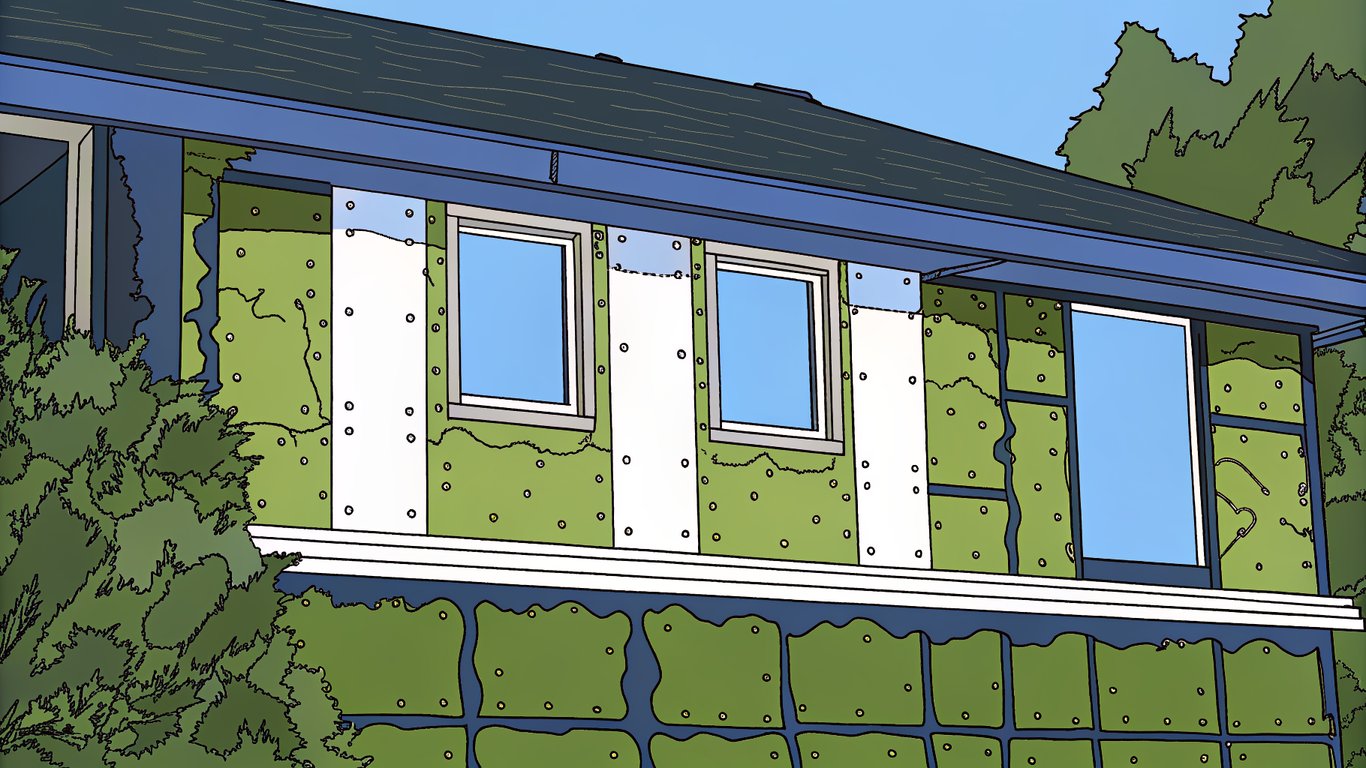
For better performance, consider adding continuous exterior insulation. A layer of rigid foam board on the outside of your sheathing eliminates thermal bridging through studs and can boost total wall R-value to R-30 or higher.
Basement and Foundation R-Values
Basement walls need at least R-20. Many Quebec homes have uninsulated or poorly insulated basements, which is a huge source of heat loss.
Quebec’s deep frost line means your foundation extends well below grade. Insulating the full height of your basement walls makes a noticeable difference in comfort and heating costs.
Basement floors are often overlooked but can benefit from R-10 insulation, especially if you’re finishing the space.
Floor and Crawl Space Insulation
Floors over unheated spaces like garages or crawl spaces should have R-30 minimum. Cold floors are uncomfortable and waste energy.
Crawl spaces themselves should have insulated walls (R-20) rather than insulating the floor above. This approach is generally more effective and easier to air seal properly.
How R-Value Directly Affects Your Heating Costs
Let’s talk money. R-value isn’t just a technical specification. It directly impacts what you pay to heat your home every winter.
The Cost of Heat Loss in Quebec Winters
An inadequately insulated attic can lose 25-30% of your home’s heat. Walls might account for another 20-25%. Add in basement losses and you’re potentially wasting half your heating energy.
With Quebec’s six-month heating season, that adds up fast. A typical home might spend $2,000-3,000 annually on heating. If you’re losing 40% to inadequate insulation, that’s $800-1,200 literally escaping through your walls and roof every year.
Calculating Potential Savings from Higher R-Values
Upgrading from R-20 to R-50 in your attic can reduce heat loss through that area by 60%. If your attic was responsible for 30% of your total heat loss, you’ve just cut that to 12%.
On a $2,500 annual heating bill, that 18% reduction in total heat loss translates to about $450 in annual savings. Every year. For decades.
The exact savings depend on your current insulation levels, home size, and heating system efficiency. But the pattern holds: better R-values mean lower heating costs.
R-Value and Different Heating Systems
Electric baseboard heating is common in Quebec and relatively expensive to operate. Better insulation has a bigger financial impact when your heating costs are higher.
Natural gas heating is cheaper per unit of heat, but you’ll still see significant savings from improved R-values. The percentage reduction in energy use stays the same regardless of fuel type.
Heat pumps are becoming more popular in Quebec. They’re efficient, but they still benefit from good insulation. Better R-values mean your heat pump runs less often and maintains comfort more easily.
Return on Investment for Insulation Upgrades
Attic insulation upgrades typically pay for themselves in 3-7 years through energy savings. Wall insulation takes longer, maybe 10-15 years, because it’s more expensive to install.
But insulation lasts 50+ years when properly installed. Even a 15-year payback means 35+ years of pure savings after that.
Quebec’s Rénoclimat program and federal grants can cover 25-40% of insulation upgrade costs, dramatically improving your ROI.
Impact on Summer Cooling Costs
Quebec summers are getting warmer. Good insulation works both ways, keeping heat out during summer just as it keeps heat in during winter.
Homes with proper R-values stay cooler naturally, reducing air conditioning needs. Your AC unit runs less often and works more efficiently.
The summer savings are smaller than winter savings in Quebec’s climate, but they’re real. And they make your home more comfortable during heat waves.
Common R-Value Mistakes Quebec Homeowners Make
Even with good intentions, it’s easy to mess up insulation projects. Here are the mistakes I see most often.
Assuming All Insulation Types Perform Equally
R-20 is R-20, right? Not exactly. Different materials achieve that rating at different thicknesses and have different installation requirements.
Fiberglass batts are cheap but need careful installation to avoid gaps. Spray foam costs more but seals air leaks while insulating. Mineral wool resists moisture better than fiberglass.
The best choice depends on your specific situation, not just the R-value number.
Ignoring Air Sealing Before Adding Insulation
This is probably the biggest mistake. Air leaks can negate even high R-values by allowing air to bypass your insulation entirely.
Seal first, insulate second. Caulk gaps around windows and doors. Seal penetrations where pipes and wires pass through walls. Use spray foam around rim joists.
A home with R-40 insulation and major air leaks will perform worse than one with R-30 and good air sealing.
Compressing Insulation and Reducing R-Value
Fiberglass and mineral wool work by trapping air. Compress them and you squeeze out those air pockets, destroying their insulating ability.
Don’t stuff R-30 batts into a space designed for R-20. Don’t compress insulation to make room for wiring or pipes. You’ll end up with much less than the rated R-value.
Overlooking Thermal Bridging
Wood studs conduct heat much better than insulation. In a standard wall, studs make up about 15-20% of the wall area.
Even with R-20 insulation between studs, your effective wall R-value might only be R-16 or R-17 because of thermal bridging through the framing.
Continuous exterior insulation eliminates this problem by covering the studs completely.
Choosing R-Value Based on Price Alone
The cheapest insulation option usually isn’t the best value. Consider installation costs, longevity, and actual performance.
A material that costs 30% more but lasts twice as long and performs better in real-world conditions is probably worth it.
Factor in energy savings over the insulation’s lifetime, not just upfront costs.
Maximizing R-Value Performance in Your Quebec Home
Getting the most from your insulation investment requires more than just buying high R-value materials.
Professional Assessment and Energy Audit
A professional energy audit identifies exactly where your home is losing heat. Thermal imaging cameras reveal cold spots and air leaks you can’t see otherwise.
The audit tells you which upgrades will have the biggest impact. Maybe your attic is fine but your basement is terrible. Or your walls are okay but you have massive air leakage.
Rénoclimat provides subsidized energy audits for Quebec homeowners. It’s worth doing before spending money on insulation.
Proper Installation Techniques
Installation quality matters as much as R-value. Gaps, compression, and poor air sealing can cut your effective R-value in half.
Professional installers know how to handle different materials properly. They understand vapor barriers, ventilation requirements, and building science.
DIY insulation can work for simple projects like adding attic insulation. But walls, basements, and complex areas usually benefit from professional installation.
Combining Insulation Types for Optimal Performance
Sometimes the best approach uses multiple insulation types. Spray foam for air sealing and hard-to-reach areas, plus fiberglass batts for bulk insulation.
Continuous exterior insulation over standard wall insulation eliminates thermal bridging and boosts overall R-value significantly.
The right combination depends on your home’s construction, your budget, and your performance goals.
Maintaining R-Value Over Time
Insulation should last 50+ years, but only if you protect it from moisture and damage.
Ensure proper ventilation in attics to prevent moisture buildup. Fix roof leaks immediately. Don’t let plumbing leaks soak insulation.
Check your insulation periodically. Look for settling, water damage, or pest problems. Address issues quickly to maintain performance.
Quebec Rebates and Incentives for Insulation Upgrades
The Rénoclimat program offers grants up to several thousand dollars for insulation improvements. You need before and after energy audits to qualify.
Federal programs like the Canada Greener Homes Grant provide additional funding for energy efficiency upgrades including insulation.
These programs can cover 25-40% of your insulation costs, making upgrades much more affordable. Check current program details as funding levels and requirements change.
When to Call a Quebec Insulation Professional
Adding loose-fill insulation to an accessible attic? That’s probably a reasonable DIY project if you’re handy.
But call a professional for wall insulation, spray foam applications, basement insulation, or any project involving vapor barriers and ventilation. The stakes are too high to mess up.
Poor insulation installation can lead to moisture problems, mold growth, and structural damage. Professional installation ensures you get the full R-value you’re paying for and avoid costly mistakes.
Look for contractors with experience in Quebec’s climate and familiarity with local building codes. Ask about their approach to air sealing and moisture management, not just R-values.